
News & Articles

Understanding Breast Cancer: Principles of Treatment

Breast cancer treatment is divided into three broad categories:
- Local treatment of the breast
- Regional treatment of the lymph nodes
- Systemic treatment for the whole body
Surgery is often a key cornerstone in the treatment of breast cancer, achieving both local and regional control of the cancer.
In addition to surgery, other treatments such as radiation, chemotherapy, targeted therapy and endocrine therapy are used to complement the effects of surgery. Altogether, the combination of these treatments reduces the risk of breast cancer relapse. Every patient’s breast cancer can be slightly different, so the treatments may vary, even though the broad principles remain similar.
SURGICAL TREATMENT
The aim of surgical treatment is to ensure the tumour is removed as completely as possible. At the same time, consideration is also given to reducing the long-term risk of relapse in the remaining breast tissue. For example, surgery may involve removing at-risk tissue that has demonstrated pre-cancerous changes, indicating the patient is at high risk of developing breast cancer in the near future.
Breast conservation surgery
As the name implies, the cancer is removed with a rim of normal tissue, preserving the breast. Terms such as wide local excision, lumpectomy, partial mastectomy, segmentectomy and quadrantectomy are all variations of breast conservation surgery.
Sometimes breast conservation surgery is described as oncoplastic surgery, where the surgeon applies plastic surgery techniques to reshape the breast after removing the cancer. The aim is to maintain the aesthetic appearance of the breast, preventing deformity as much as possible.
For small defects after cancer removal, the breast tissue around the defect can be freed and shifted into the defect to fill the space. For larger defects, the surgeon may need to harvest some tissue from around the breast area and move it into the defect to replace the removed cancerous tissue. These techniques are sometimes termed partial reconstruction.
Another variation of oncoplastic surgery is mammoplasty, where cancer removal is combined with a reduction and lift of the breast to achieve an improved appearance.
Breast removal surgery
Mastectomy refers to the removal of the entire breast. There are several types of mastectomy, including simple mastectomy, nipple- or areola-sparing mastectomy, skin-sparing mastectomy and radical mastectomy.
Mastectomy can be paired with breast reconstruction, ideally performed at the same time as the mastectomy, although a delayed approach may sometimes be preferred on a case-by-case basis.
Breast reconstruction can be performed using silicone implants or the patient’s own body tissue, taken from areas such as the back, tummy, thigh or buttocks. Fat can also be obtained via liposuction for grafting. Such types of reconstruction are mostly performed by plastic surgeons.
Sentinel lymph node biopsy
The sentinel lymph node is the first lymph node that breast cancer spreads to. It is usually situated in the underarm (axilla) area, and there is often more than one sentinel lymph node.
During breast cancer surgery, the surgeon often needs to perform a sentinel lymph node biopsy to determine if any cancer has spread to the lymph nodes. This is essential for accurate staging of the disease and helps determine what additional treatment the patient may need after surgery.
Sentinel lymph node biopsy is not usually associated with any long-term side effects.
Axilla clearance/axilla lymph node dissection
This procedure involves removing all the lymph nodes in the underarm. It is necessary when the breast cancer has spread significantly to the underarm lymph nodes. Patients with relatively minor spread to the underarm lymph nodes may not always require axilla clearance.
Patients who undergo axilla clearance may experience more side effects than those who have a sentinel lymph node biopsy. Common effects are shoulder stiffness and cording, numbness of the underarm or upper inner arm and lymphoedema. Most of these effects can be reduced with physiotherapy and consistent arm stretching and exercises. However, some patients may experience significant, persistent lymphoedema requiring treatment.
Content reproduced with permission from The Breast Years of Your Life © Singapore Breast Surgery Center Pte Ltd.
After treatment ends: Navigating the Breast Cancer Survivorship Years
What does survivorship mean after a breast cancer diagnosis? For many individuals, survivorship begins at diagnosis and continues through treatment and beyond — including for those living with metastatic breast cancer.
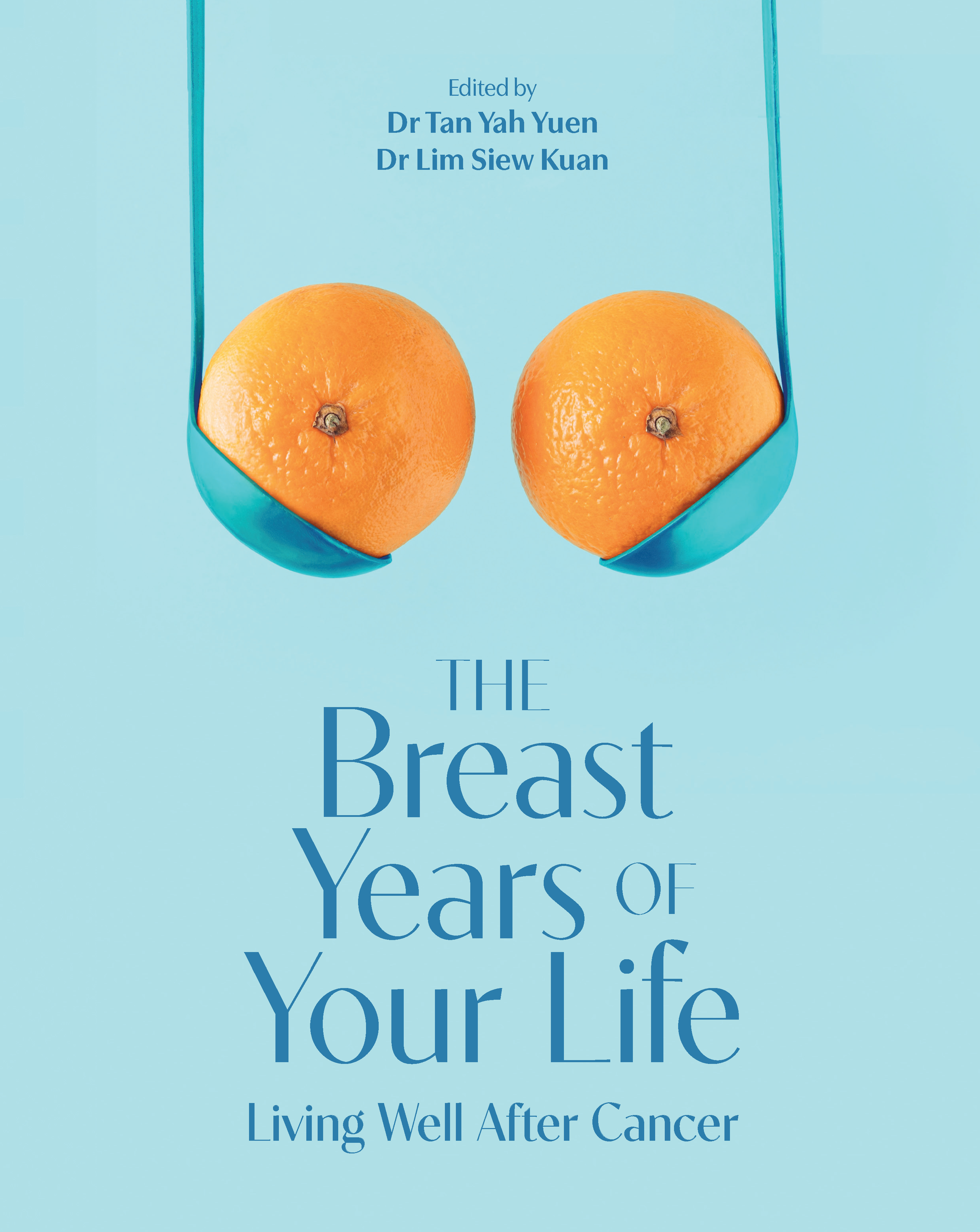
The Breast Years of Your Life – Living Well After Cancer is a thoughtfully designed book offering 260 pages of practical and heartfelt guidance for navigating life after breast cancer. Co-authored by a multidisciplinary team of experts, it explores key topics including physiotherapy, fertility and family planning, nutrition and wellness, Traditional Chinese Medicine (TCM) approaches, sexual health and intimacy, as well as recipes, exercises, and mental wellbeing.
In the following two extracts from the book, the contributors outline the principles of breast cancer treatment and systemic therapy, drawing on years of clinical experience to help individuals better understand treatment approaches that may be used at different stages of care.
To purchase a copy of the book, please visit https://www.solis.sg/the-breast-years-of-your-life/.
| POSTED IN | Cancer Treatments |
| READ MORE ABOUT | Breast Cancer |
| PUBLISHED | 01 April 2026 |