
News & Articles

Cancer Immunotherapy & Breakthroughs
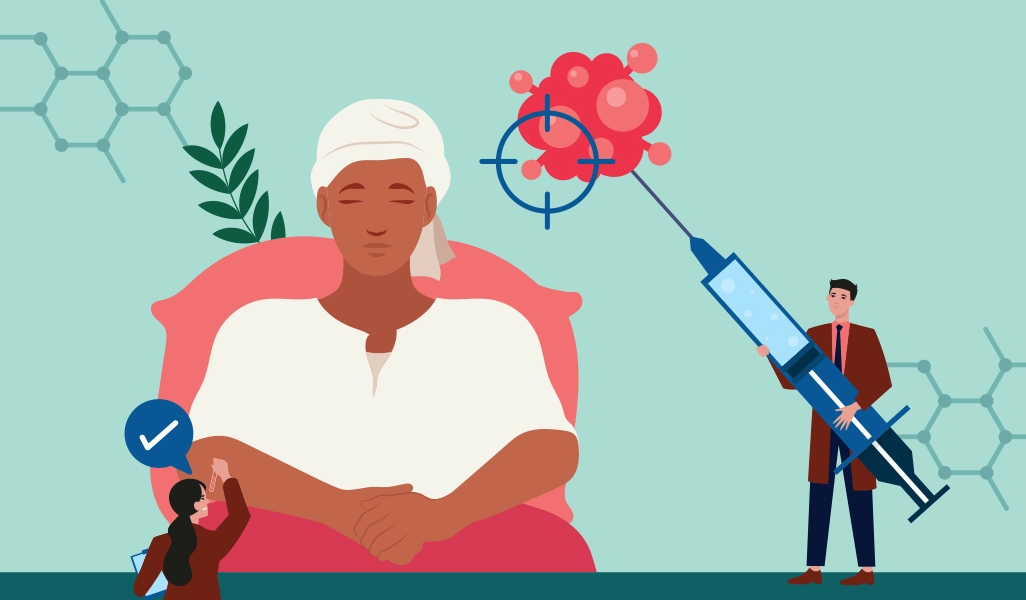
Immunotherapy, targeted therapies, and molecular profiling are transforming the cancer treatment landscape, offering more precise, less toxic, and longer-lasting treatment options.
Cancer care is evolving - from early antibody experiments to breakthroughs in PD-L1 immunotherapy, targeted pills, and CAR-T therapy—while prevention and lifestyle remain as a strategic cornerstone in reducing the global burden.
Shahid Akhter, Consulting Editor of FE Healthcare, spoke to Dr Ang Peng Tiam, Medical Director & Senior Consultant, on the evolution of cancer care, new frontiers in immunotherapy, and the enduring role of prevention.
COULD YOU WALK US THROUGH THE JOURNEY OF IMMUNOTHERAPY—FROM MONOCLONAL ANTIBODIES TO THE NEWER PD-L1 INHIBITORS LIKE KEYTRUDA OR NIVOLUMAB?
The term “immunotherapy” has to be defined. Immunotherapy is basically any form of treatment that applies or uses the body’s immune system for treatment of disease.
In the past, when discussing immunotherapy, we were primarily referring to the use of monoclonal antibodies. For example, in the case of lymphoma, we use an anti-CD20 antibody, which has been shown to be very effective. It has demonstrated improvement in both response rates and cure rates in the treatment of non-Hodgkin’s lymphoma. So when antibodies are deployed, that is a form of immunotherapy.
However, the use of the term “immunotherapy” has somewhat changed today. We are actually talking about using anti-PD-L1 therapy to enhance the body’s immune system to fight against cancer.
IN 1976, YOU AND YOUR COLLEAGUES WON THE NATIONAL SCIENCE AWARD FOR A CANCER EXPERIMENT. COULD YOU TELL US WHAT INSPIRED THAT STUDY AND WHAT YOU DISCOVERED?
My fellow co-investigators and I won the Singapore National Science Award back in 1976. It started with a simple question “why do people develop cancer?” One of the prevailing ideas was that people develop cancer because their immune system was weak. In our experiment, we identified patients who had just been diagnosed with cancer. We ran a series of blood tests to determine if there was anything wrong with their immune system. Surprisingly, our tests did not detect any difference between cancer patients and those who did not have cancer. In other words, it suggested that this theory of a weak immune system leading to cancer does not appear to be true.
Since the cancer patients appeared to have intact immune systems, why weren’t their systems able to detect the cancer cells and prevent cancer from developing? Were cancer cells being “protected” from detection? To try and answer this question, we went on to identify patients whose tumours were very accessible. In other words, these metastatic lesions were on the skin or just under the skin.
In our experiment, we took blood from mice and injected it directly into the tumours. Surprisingly, in many of the patients, we saw the tumours shrink in size. We concluded that the body’s immune system was able to fight against the cancer cells because it could identify these tumours as being foreign. With mice blood impregnated in the tumours, the human body was able to recognise the cancer cells as being foreign. In response, the immune system was able to awaken itself and mount a response against the tumours. After we published and submitted a paper, the three of us won the National Science Award that year, and happily shared the $5,000 prize money.
WHY DID YOUR FINDINGS STOP AT THE NATIONAL SCIENCE AWARD, AND HOW DID LATER DISCOVERIES ABOUT PD-L1 TURN THAT SAME CONCEPT INTO NOBEL-LEVEL SCIENCE?
The question being asked is, why was only the National Science Award received? It was vital. Why didn’t we win the Nobel Prize, which is $1 million? The answer is that if you could ensure the incorporation of foreign genetic material into every cancer cell while excluding normal cells, then you would deserve the Nobel Prize.
But we couldn’t, because ours was a physical injection of the foreign genetic material into a local tumour. That experiment merely helped us explain how these cancer cells were evading detection by the normal immune system. The cancer cells had a camouflage that hid them from the body’s immune system. Once we incorporated foreign genetic material that the immune system could detect, it was able to fight against the cancer.
Now fast forward. Scientists have now identified this camouflage as PD-L1 (Programmed Death Ligand One) and developed anti-PD-1 immunotherapy to strip the camouflage and allow the body’s immune system to detect and attack cancer cells.
KEYTRUDA’S SUCCESS IN MELANOMA RAISED HOPES IT COULD CURE MANY CANCERS. YET RESULTS WERE MIXED—EFFECTIVE IN SOME, INEFFECTIVE IN OTHERS. WHAT EXPLAINS THIS SELECTIVE RESPONSE?
The concept of anti-PD-1 therapy, also known as immunotherapy, was first approved specifically for one type of tumour: melanoma. In 2014, the drug Keytruda was approved as a standard treatment for metastatic melanoma. The wonderful thing about this result is that it is very sustained. Once the body’s immune system is awakened, it continues to monitor the body against melanoma cells. Many of the treated patients live on for years and years. They also enjoy years of remission.
Medicine is very intriguing. Every time a new treatment is discovered, researchers eagerly test it on various tumour types, wondering if it could potentially cure all cancers. So the trials were run in breast cancer, in colon cancer, and in lung cancer etc. And they find it works on some and not others. For example, we find that Keytruda works in patients with triplenegative breast cancer and incorporating immunotherapy into chemotherapy programmes leads to much better results.
But there are many other factors influencing the efficacy of immunotherapy drugs, such as the profile of the tumours, the patients’ immunity systems, and the ability of cancer cells to adapt and mutate to make treatment ineffective.
WHAT DOES THE FUTURE OF IMMUNOTHERAPY LOOK LIKE—MORE UNIVERSAL OR MORE TARGETED?
One very common use of immunotherapy is for lung cancer. In lung cancer, they were able to demonstrate that tumours are very high in PD-L1. Patients may only need anti-PD-L1 immunotherapy, possibly avoiding chemotherapy, and get dramatic and nonlethal, but sustained, responses.
However, combining immunotherapy with chemotherapy has proven beneficial, even for cancers with low PD-L1 scores. With increased testing, it is possible to identify numerous subtypes of different cancers that can benefit from this treatment. For example, results for Hodgkin’s disease are wonderful. In the vast majority of patients with Hodgkin’s disease who received chemotherapy, the use of immunotherapy led to both dramatic and sustained responses.
You see this effect in breast cancer, kidney cancer, thyroid cancer, and uterine cancer. It is also very effective in squamous cell carcinoma of the head and neck. Basically, patients with MSI-high (microsatellite instability-high) cancers are more responsive to immunotherapy. But there are cancers for which this is not effective. For instance, in more than 95% of colorectal cancer patients, immunotherapy has no role.
YOU MENTIONED THAT IT IS MAINLY PATIENTS WITH MSI-HIGH CANCERS WHO BENEFIT FROM IMMUNOTHERAPY. WITH SO MANY TRIALS UNDERWAY, HOW DO YOU SEE THE TREATMENT’S ROLE EXPANDING IN THE FUTURE?
Currently, there is an increasing number of anti-PD-L1 agents entering the market. They will make a big difference in the future but we really have to wait for the clinical trials to be completed before we see the impact.
But immunotherapy has been a new concept which has made a big difference in a wide range of tumours. There are now many treatment protocols which incorporate both chemotherapy and immunotherapy.
There is so much research going on around the world. Every year I make it a point to go to the American Society of Clinical Oncology’s annual meeting where thousands of abstracts would be presented. They are trying every different sort of combination concept to understand cancers better. It’s really a fast-growing field. Will there be immunotherapy combined with different targeted agents or radiation therapy? These are all possibilities for the future.
YOU DESCRIBED HOW A SIMPLE PILL CAN REPLACE CHEMOTHERAPY FOR MANY STAGE 4 LUNG CANCER PATIENTS. HOW BIG A SHIFT IS THIS IN ONCOLOGY PRACTICE?
This is really due to advances in molecular genetics. In lung cancer patients with EGFR mutation, you don’t need to give chemotherapy. You just need to pop a pill which targets the mutation. With this pill, the large majority of patients, even when they are Stage 4, will have a dramatic response. Even better, if the cancers have mutations in ALK or ROS1; by taking a pill, the patients’ lifespan can extend significantly. We are talking about more than five years, ten years, or 15 years.
In other words, you are not able to cure the cancer, but you are able to control the cancer in such a sustained, remarkable way with minimal toxicity. So molecular profiling has really made a tremendous difference in the way in which we treat cancer, and how we improve the quality of life tremendously.
You cannot put a patient on a very toxic chemotherapy programme for years and years. After six or eight cycles, the patient develops side effects such as numbness of the fingers and toes, weakness of the muscles etc. It’s very different if we are talking about these oral targeted agents. These tablets have minimal toxicity. You don’t have hair loss, and there is minimal nausea and vomiting. You can function normally with a good quality of life. And because the toxicity profile is so low, you’re able to continue using these drugs for extended periods of time.
PREVENTION: THE OTHER HALF OF THE CANCER BATTLE
New therapies and advancements in cancer care bring hope. But prevention is just as important.
With novel therapies and new treatments, we are still talking about years of and years of research, not weeks or months. For example, CAR-T cell therapy has not gone beyond lymphoma or leukaemia. The future will come and will be more and more exciting when we find applications of CAR-T cell therapy for a non-hematologic malignancy, which will unlock unprecedented possibilities in cancer treatment.
At the same time, the cancer burden on healthcare continues to be high. We continue to see large numbers of patients with cancer from all over the region. Cancer continues to be a much-dreaded and common disease. We need more public education in terms of cancer prevention, rather than spending so much money on treatment.
There are known risk factors for cancer, some that are preventable and some that are not. For example, you can’t prevent a family history of cancer. But there are lifestyle changes that we can make. Cigarette smoking for instance is responsible for a wide range of cancers: lung cancer, oesophageal cancer, cancer of the oropharynx, just to name some.
That is Public Enemy Number One as far as doctors are concerned. Also, there are good wellness guidelines we should follow. Don’t be obese. Keep a healthy weight. Do more exercise and eat more fruit and vegetables. Lifestyle changes make a lot of difference.
| POSTED IN | Cancer Treatments |
| READ MORE ABOUT | Blood Cancer, Breast Cancer, Colorectal Cancer, Head and Neck Cancer, Kidney Cancer, Leukaemia, Lung Cancer, Lymphoma, Melanoma |
| PUBLISHED | 01 March 2026 |