
News & Articles

A Guide to Precise & Personalised Breast Cancer Treatment
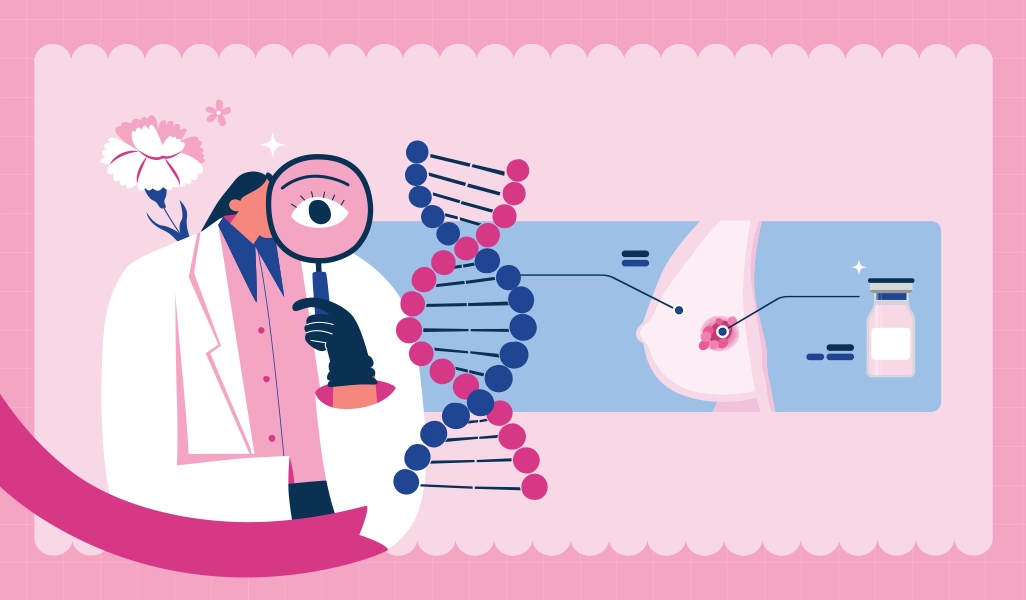
From molecular profiling to holistic healing, today’s breast cancer treatments restore confidence, dignity, and a renewed sense of self, helping women emerge stronger than before.
Breast cancer treatment today is more precise and compassionate than ever before. With advances in genomic testing, oncologists can now tailor therapies to each woman’s unique cancer profile, targeting tumour cells with remarkable accuracy while sparing healthy tissue. Combined with reconstructive surgery and psychosocial support, this holistic approach helps women heal not just physically, but emotionally, reclaiming wholeness after cancer.
TARGETED THERAPIES
Thanks to genomic testing and molecular profiling, oncologists can now identify specific characteristics of a patient’s cancer and match them with targeted therapies. For example, HER2- positive breast cancers, where overexpression of HER2 protein causes accelerated growth of breast cancer cells, tend to behave in a more aggressive manner.
Oncologists will choose to use targeted HER2 therapy such as monoclonal antibody or use antibody-drug conjugates to stop cancerous growth.1 These drugs target the HER2 proteins on cancer cells and increase the effectiveness of chemotherapy drugs.2
Approximately 70-80% of breast cancers are hormone receptor-positive, which means cancer cells express the oestrogen and/or progesterone (hormone) which fuel cancer growth. Treatment to block the hormone receptors will be used in this circumstance. Targeted therapy drugs can support the effectiveness of hormone therapy. For instance, drugs that block proteins known as CDKs, especially CDK4 and CDK6, help to slow cancer growth in hormone receptor-positive, HER2- negative breast cancers.3
Such personalised treatments are far more precise than conventional chemotherapy. Instead of carpet-bombing the body, they target cancer cells with greater accuracy, often resulting in fewer side effects and better outcomes.
HEALING THE BODY AND THE MIND
The emotional toll of breast cancer is as real as the physical one. Many women experience profound grief over the loss of their breasts, hair, or perceived femininity. Reconstructive surgery is not merely cosmetic. Rather, it plays a critical role in helping women heal mentally and emotionally as well.
Restoring the breast can reduce feelings of disfigurement, restore a sense of wholeness, and help patients integrate more confidently into social and professional settings. Research through the years has also found that women who underwent breast reconstruction fare significantly better in mental health and report less anxiety and depression compared to those who did not.4
A HOLISTIC VISION OF HEALING
As cancer care increasingly embraces person-centred healing, shared decision-making is also becoming a key part of the breast cancer treatment journey. Decision aids, counselling, and multidisciplinary care teams ensure that patients feel informed, supported, and in control at every stage.
By integrating surgery, oncology, and psychosocial support, today’s breast cancer care offers a journey that is precise, personalised, and clinically rigorous, helping women not only survive, but move forward with strength, confidence, and a renewed sense of wholeness.
References
- American Cancer Society. 2025. Breast Cancer HER2 Status. https://www.cancer.org/cancer/types/breast-cancer/understanding-a-breast-cancer-diagnosis/breast-cancer-her2-status.html
- American Cancer Society. 2025. Targeted Drug Therapy for Breast Cancer. https://www.cancer.org/cancer/types/breast-cancer/treatment/targeted-therapy-for-breast-cancer.html>/a>
- Ibid.
- Roy, N., Downes, M. H., Ibelli, T., Amakiri, U. O., Li, T., Tebha, S. S., Balija, T. M., Schnur, J. B., Montgomery, G. H., & Henderson, P. W. (2024). The psychological impacts of post-mastectomy breast reconstruction: a systematic review. Annals of breast surgery: an open access journal to bridge breast surgeons across the world, 8, 19. https://doi.org/10.21037/abs-23-33
| POSTED IN | Cancer Treatments |
| TAGS | breast cancer |
| READ MORE ABOUT | Breast Cancer |
| PUBLISHED | 01 January 2026 |