News & Articles

Fighting Lung Cancer: Your Guide to Stages, Treatments, and Recovery
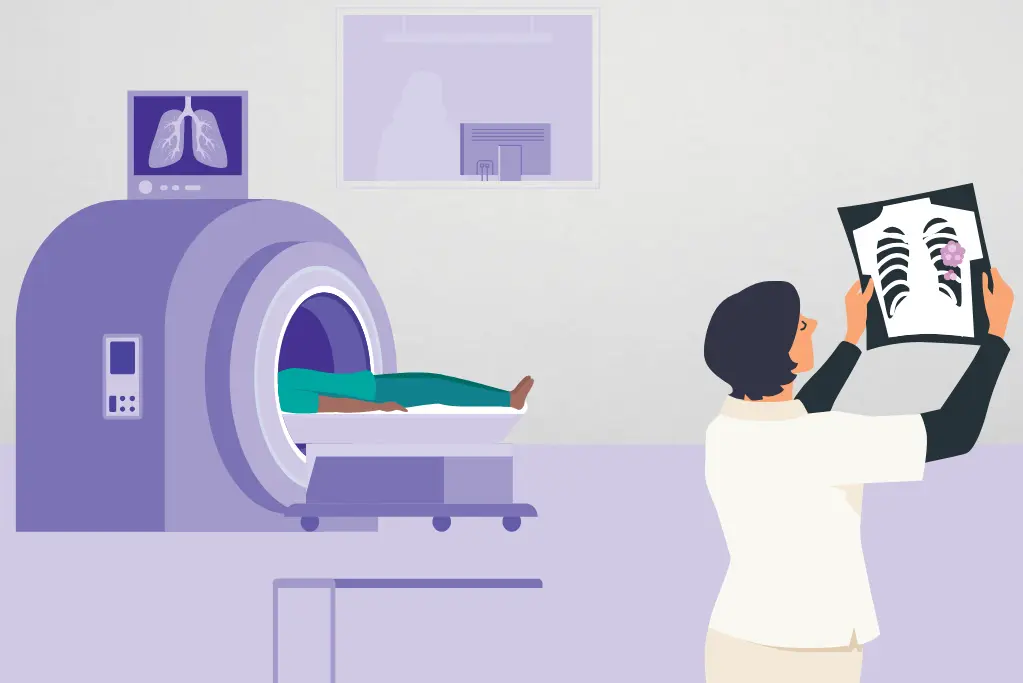
Lung cancer is one of the most common cancers worldwide, but advances in treatment are giving patients better outcomes than ever before. Dr Wong Siew Wei, Senior Consultant in Medical Oncology at Parkway Cancer Centre, addresses common questions about treatment, prognosis, and the importance of early detection.
WHAT IS THE DIFFERENCE BETWEEN SMALL CELL AND NON-SMALL CELL LUNG CANCER?
Lung cancers fall into two main categories: small cell and non-small cell.
Small cell lung cancer is aggressive, often originating in the central part of the lungs and spreading early. It is almost exclusively linked to smoking.
Non-small cell lung cancer includes several types such as adenocarcinoma, squamous cell carcinoma, large cell carcinoma, and sarcomatoid and carcinoid tumours. These cancers can occur in smokers and non-smokers. Adenocarcinomas, in particular, may carry mutations that are treatable with targeted therapies.
Cancers that spread to the lungs from other parts of the body are not classified as lung cancers.
HOW DO EARLY AND ADVANCED STAGES DIFFER?
As with all cancers, early detection makes a huge difference. The five-year survival rate for Stage 1 lung cancer is as high as 90 percent. This drops to between 10 and 20 percent for Stage 4 lung cancers. Although effective new drugs are available, the biggest impact remains in treating early-stage disease, where the treatment goal is cure. In advanced stages, treatment focuses on controlling the cancer over the long term.
IS SURGERY ALWAYS NEEDED TO CURE LUNG CANCER?
Surgery is a key part of treatment for patients with Stage 1 to 3A lung cancer, and is often combined with chemotherapy, targeted therapy, immunotherapy or radiotherapy. However, not all patients are suitable for surgery, as they need sufficient lung reserve afterwards.
For instance, stage 1 lung cancer may be treated effectively with stereotactic body radiation therapy (SBRT). For more advanced Stage 3 lung cancers involving neighbouring lymph nodes, chemotherapy and radiotherapy followed by additional drug treatment can offer curative potential. Most patients benefit from a combination of tailored treatments.
WHAT ARE THE COMMON SIDE EFFECTS OF CHEMOTHERAPY AND RADIATION?
Generally, chemotherapy can cause side effects such as fatigue, appetite changes, dry skin, nausea, and lower blood counts, which may reduce immunity. Some types of chemotherapy, particularly those used in later stages, can also cause hair loss, diarrhoea or numbness.
Radiotherapy side effects depend on the treatment site but are generally reduced with newer techniques. Proton beam therapy is one such advancement. Chest radiotherapy, for example, may cause transient painful swallowing in some patients. Early side effects include nausea, fatigue and skin changes, while late effects may include lung scarring.
WHAT IS THE SUCCESS RATE OF TREATMENT?
Success depends on the cancer stage at diagnosis, the patient’s overall fitness, and access to a multidisciplinary team consisting of a medical oncologist, surgeon, and radiation oncologist. Stage 1 non-small cell lung cancer has a five-year survival rate of up to 90 percent, but survival drops to around 30 to 50 percent for Stage 3 cancers.
CAN LUNG CANCER BE COMPLETELY CURED? HOW CAN RECURRENCE BE PREVENTED?
Although lung cancer is a deadly disease, early detection and access to the best available treatments maximise the chances of a cure. Many patients require a combination of treatments to achieve the best outcome.
Increasingly, patients may receive drug treatments before surgery, an approach known as neoadjuvant treatment, to shrink the tumour and reduce the risk of spread. Some patients may also benefit from additional treatment after surgery to further improve the chances of a cure, depending on the subtype of lung cancer.
| POSTED IN | Cancer Treatments |
| TAGS | lung cancer |
| READ MORE ABOUT | Lung Cancer |
| PUBLISHED | 01 November 2025 |